

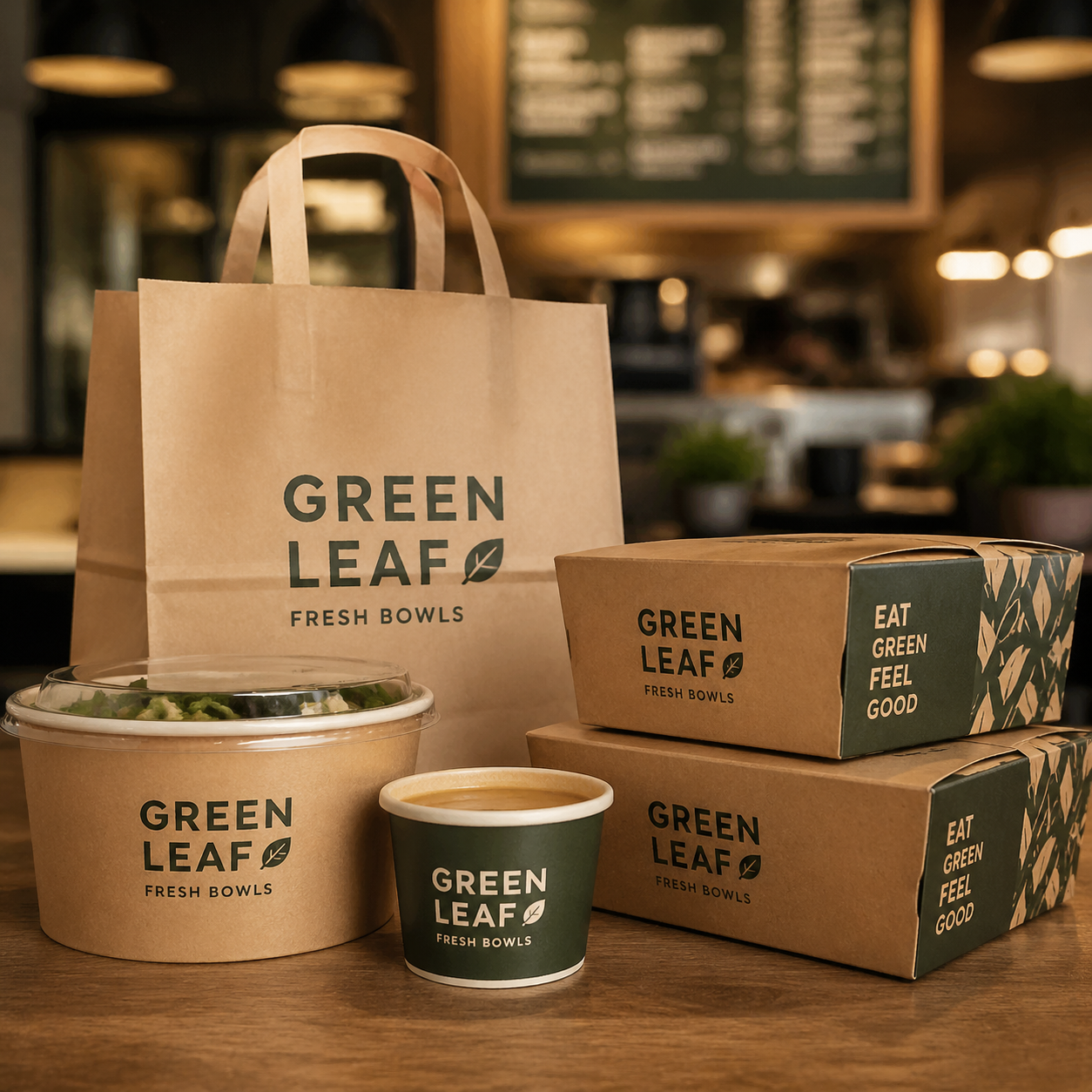
Food Packaging Is a Logistics System, Not Just a Container
Food brands that scale successfully treat packaging as part of operations. A well-designed food box must protect temperature, resist grease migration, survive delivery handling, and still present the brand clearly in social media photos. Market-leading competitors have increased educational content around dimensions and material compatibility because these factors directly affect repeat orders and return rates.
If you are launching or optimizing a food packaging line, start with the product journey: kitchen prep, pack-out speed, rider transport, and customer unboxing. Every step adds constraints that should influence box design.
Dimension Planning: Fit, Venting, and Stackability
Right-size packaging reduces food movement and protects presentation. Oversized boxes increase material spend and may lead to product shifting, while undersized boxes can crush toppings or deform the structure.
- Define internal dimensions by final plated volume, not raw ingredient size.
- Add vent holes for products that release steam to avoid sogginess.
- Design stacking geometry for stable multi-item deliveries.
When possible, create a small set of standardized dimensions that cover 70-80% of orders. This improves inventory management and reduces dead stock.
Material and Barrier Choices for Oily or Moist Foods
Grease resistance is a top failure point in takeaway packaging. For fried foods, burgers, and bakery products, use food-grade barrier options tailored to oil exposure and hold time.
- SBS or coated paperboard: good print quality with moderate barrier performance.
- Kraft + barrier coating: strong sustainability perception with practical protection.
- Greaseproof liners/inserts: cost-effective upgrade for high-oil menu items.
Always run real hold-time testing (for example 20, 40, and 60 minutes) under typical transport conditions. Lab assumptions are not enough for delivery apps.
Branding and Print: Clear Identity at Delivery Distance
Food packaging branding should be legible and memorable at a glance. In practice, high-contrast logos, short taglines, and consistent color systems outperform dense artwork. For fast-moving restaurants, one or two print colors can often achieve stronger recognition with lower per-unit cost.
Operational tip: reserve one panel for regulatory or menu-specific labels to avoid redesigning the entire box for each campaign.
Cost Control Without Sacrificing Quality
- Standardize box families across similar SKUs.
- Use insert-only changes before creating new dielines.
- Reduce ink coverage in low-visibility areas.
- Optimize ship-flat designs to lower freight volume.
These changes often reduce packaging cost while improving throughput at packing stations.
Implementation Checklist
- Define three hold-time scenarios and test leakage.
- Confirm nesting and stacking performance in transit crates.
- Validate brand visibility in low-light delivery photos.
- Align unit dimensions with courier bag constraints.
Explore our Food Boxes collection for structures suited to restaurant delivery, bakery retail, and event catering.
FAQ
What is the best material for oily takeaway food?
A coated paperboard or kraft structure with a food-safe grease barrier is typically the most balanced solution.
Should I prioritize branding or insulation?
Insulation and barrier performance come first. Branding should then be optimized within those functional constraints.
How many box sizes should a new brand launch with?
Start with a compact core set that covers most menu items, then expand based on sales data.
