

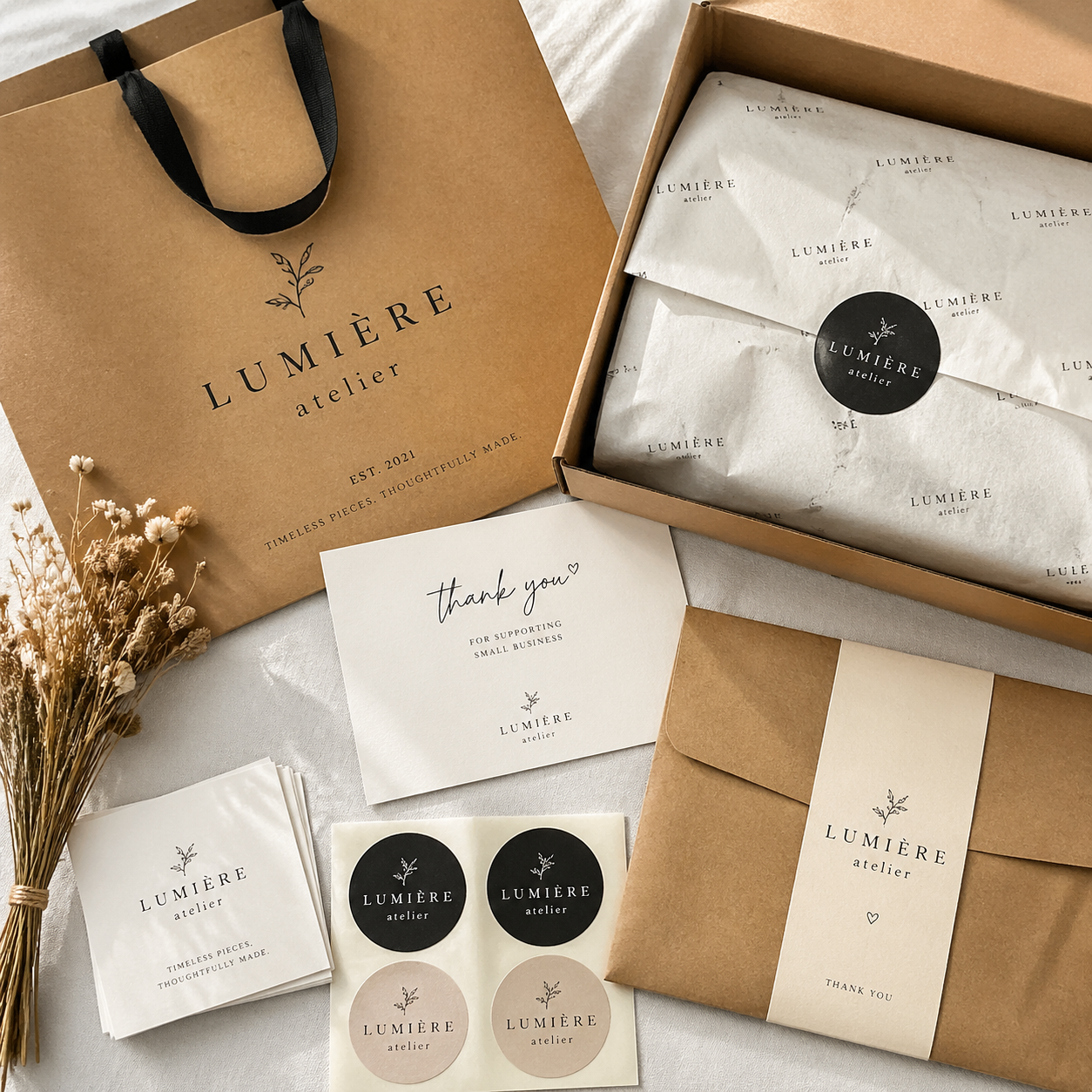
Why Single-Item Packaging Thinking Limits Brand Growth
Many brands optimize one packaging component at a time, then wonder why customer recall remains low. The better approach is a coordinated retail kit: paper bag + tissue + card + label system. Competitor leaders consistently combine these elements because cohesive packaging improves perceived value and increases user-generated content after delivery.
A coordinated kit also simplifies campaign execution. Instead of redesigning every package for each season, brands can keep a stable bag structure and update low-cost accessories.
Start with the Paper Bag as the Main Brand Surface
Your paper bag is often the first visible branded object in physical retail and event contexts. Choose size families based on actual product combinations, not guesswork.
- Small bags for accessories and compact SKUs.
- Medium bags for core products and gift sets.
- Large reinforced bags for multi-item orders.
For handle options, twisted paper handles are reliable for everyday use, while ribbon handles support premium gifting. Keep logo placement simple and balanced for quick recognition.
Use Accessories to Add Story, Utility, and Conversion Triggers
Accessories turn a standard bag into a branded experience:
- Tissue paper: protects surfaces and adds reveal value.
- Thank-you card: improves emotional connection and can include a reorder incentive.
- Sticker label: seals tissue wraps and reinforces visual identity.
- Paper card insert: ideal for care instructions, product bundles, or QR-driven tutorials.
These accessories are low-cost compared with rigid structural changes, making them ideal for campaign testing.
Campaign Framework: Seasonal Variation Without Packaging Chaos
Keep the base bag unchanged for 6-12 months and rotate only accessory graphics by season. This model balances consistency and freshness:
- Core brand bag remains constant.
- Monthly or quarterly sticker/card themes support launches.
- Limited-edition tissue colors create shareable moments.
This strategy is especially effective for cosmetics, apparel accessories, and boutique gifting brands.
Operational Considerations for Fast Fulfillment
- Pre-bundle accessory sets by campaign to reduce packing time.
- Use standardized sticker sizes to avoid print complexity.
- Create a visual packing SOP so temporary staff can pack consistently.
- Track accessory consumption separately from bag inventory.
When executed well, accessory systems improve both customer experience and warehouse efficiency.
Build Your Branded Retail Kit
View our Paper Bags and Packaging Accessories categories to design a coordinated kit for retail counters, pop-ups, and ecommerce shipments.
FAQ
Do accessories really affect repeat purchase?
Yes. Branded inserts and cards improve recall and create additional touchpoints after unboxing.
What is the most cost-effective accessory to start with?
Sticker labels and thank-you cards typically offer the best cost-to-impact ratio.
Can this strategy work for small MOQs?
Absolutely. Start with one bag size and one accessory bundle, then scale after validating performance.
